Mark-8 Restoration
Documentation
Other Mark-8's
Mark-8 Minicomputer
Apple-1
MOS Kim-1
V C F
Imsai 8080
Kenbak-1
TV Typewriter
LSI ADM-3A
ASR-33
The Digital Group
My Collection
HP-01
Test Equipment
Model Rocketry
| |
|
|
Computer
History 101 & the Mark-8 Minicomputer The
Mark-8 Minicomputer was the third microprocessor based computer ever made
available to the public, second in America, and the first to grace the
cover of a popular magazine. Arguably, the first widely known. Here's my
short version of
computer history. Although many computers were built prior to
the advent of the microprocessor, the cost of the individual components
and the cost of labor required to build them was tremendous, ranging from
hundreds of thousands to millions of dollars. One of the first "affordable"
minicomputers was the PDP-8,
a 12 bit computer made by Digital Equipment Corporation in 1965. It was
affordable, at about $18,000. That's about $117,000
in today's dollars! (Mmmm... Affordable!) The idea of having a computer
at home was little more than science fiction to most, but in the 1970's, things
began to change... In January of 1971, Federico
Faggin completed the worlds first microprocessor, the 4004. This was
a Harvard
architecture computer, with 4 bit bytes. Good for a calculator, not so
good as a general purpose home computer. About the same time that work began
on the 4004, an 8-bit CPU-on-a-chip was commissioned by a company known as
Computer Terminal
Corporation (CTI), to both Texas Instruments and Intel. TI failed to make a functional chip,
and Intel was only successful after the 4004 was completed, and Federico
was put on the task. The 8008 was released in 1972, and became the worlds
first 8-bit microprocessor. The 8008 was quickly put to
work. In 1973 a French company called R2E Corp., introduced the Micral,
the worlds first fully-assembled personal
computer based on a microprocessor. At almost the same time, an American
company headed by Nat Wadsworth began development of the Scelbi 8H. The
Scelbi (an acronym for SCientific,
Electronic, and Biological -- several anticipated computing applications) was advertised as an assembled computer in
the March 1974 issue of QST, a Ham radio publication, and went nearly unnoticed.
|
|
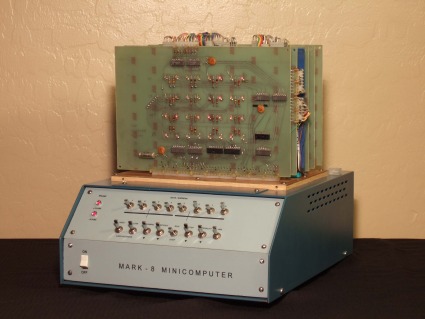
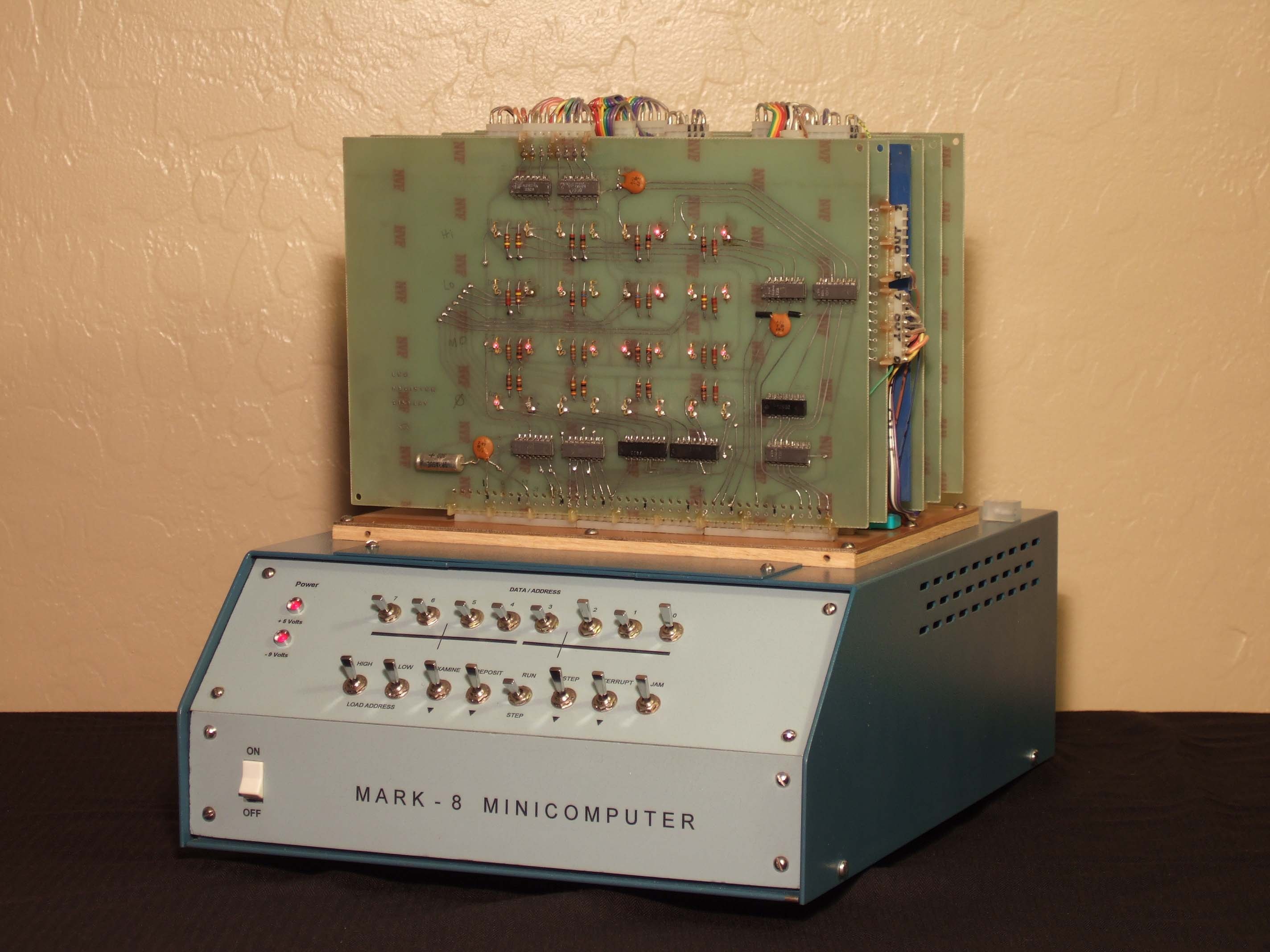
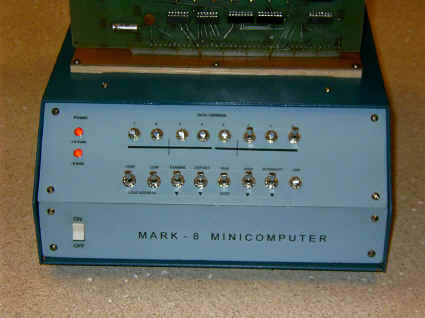
My Fully Restored Mark 8
|
|
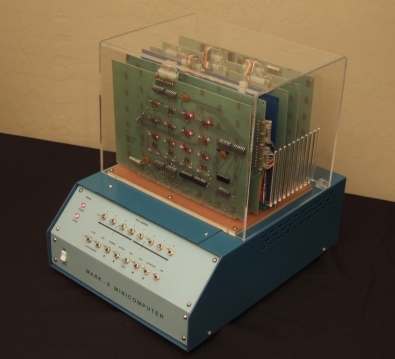
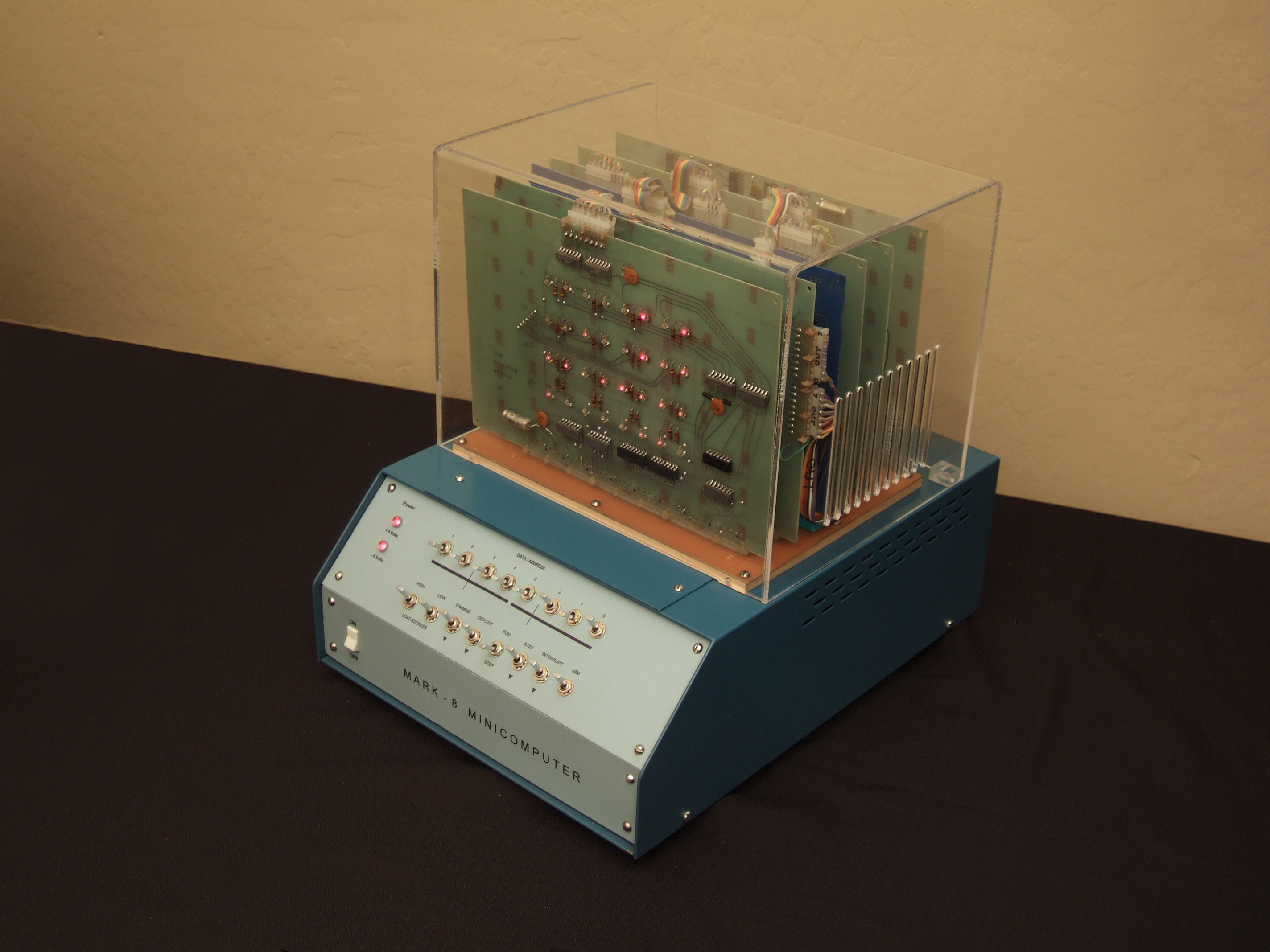
Another view, with plastic cover in place
|
|
| The Mark-8 Minicomputer
Also in 1973, Jon Titus, a graduate student at Virginia Tech working on
his PhD, designed the Mark-8 out of an interest in computer control
and data acquisition. Using the Intel data book on the 8008 as a basis, he
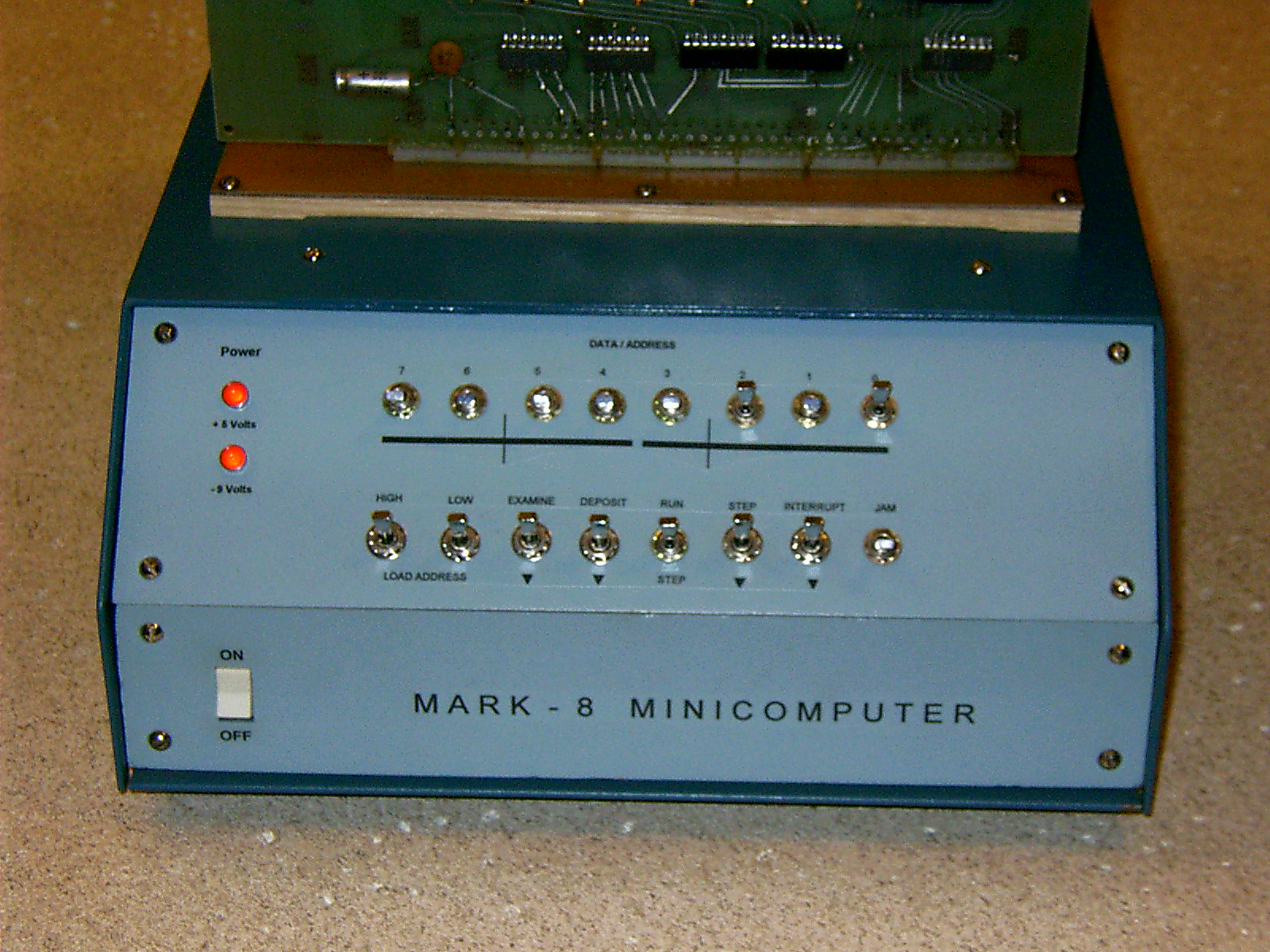
designed the Mark-8 to suit his own needs. His unique front panel design
made the computer fairly simple to understand and program. The prototype
was built using Veroboard, with a total of 768 bytes of RAM.
Jon recalls that it worked the first time he powered it up--at about 2:30
AM, no date mentioned, but presumably mid-late1973.
The Mark-8 was shopped to Popular Electronics, who showed no interest,
and to Radio Electronics where skeptics tepidly agreed to publish a construction
article after a lengthy demonstration. Jon designed and made printed circuit boards, cannibalized his prototype for
the parts
and in the spring of 1974 went to New York for a photo shoot. In July the
article was published and history was made...
|
 |
 |
 |
 |
|
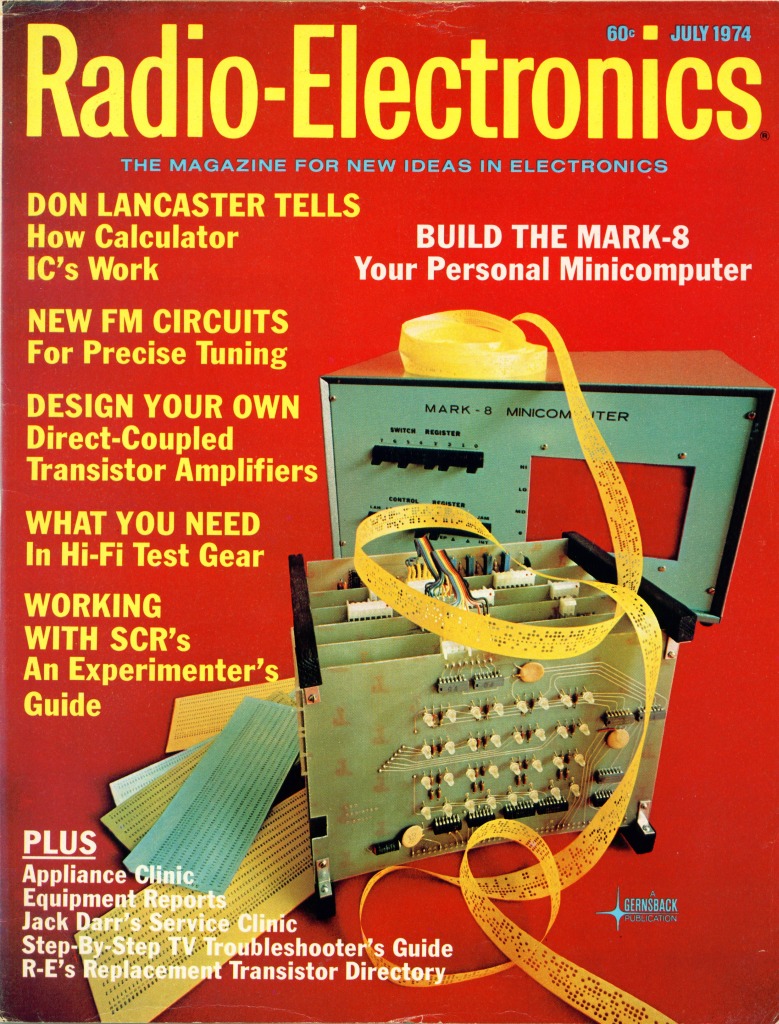
Radio Electronic Magazine
The published article in Radio Electronics magazine was interesting but sparse. It
described the basic operation of the machine with an explanation of the
operation of each of the boards, and offered some programming examples.
The article also contained a parts list so those interested could start
hunting for parts. Clever, since the Mark 8 was not offered as a complete
kit--
this was a real do-it-yourself project! The only thing offered was a board
set, scrounging of parts was entirely up to the builder.
If that didn't scare you off, and you still wanted to build a Mark-8 computer, you had to order
a set of
plans from the publisher. This was played as a plus, since
"interested readers" would get "full details on the
computer in a single package." As opposed to offering the
construction plans in the magazine pages over a period of several months. This made counting the possible
number of Mark-8's builders a little easier.
Mr.
Titus estimated from tax records that about 7500 plans were sold, and about four hundred PC board sets.
Still, estimates of the number of Mark-8's actually built varies widely.
Some have estimated the original number built at between 1000-2000. I
think those numbers sound very high for two reasons:
First, the Mark-8 was a very complicated machine from
a hobbyist standpoint, and required of the builder a skillful ability to
read and follow schematics in order to assemble and connect all the boards
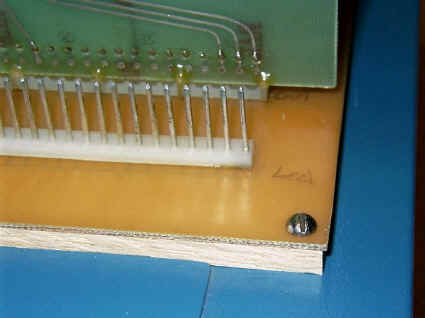
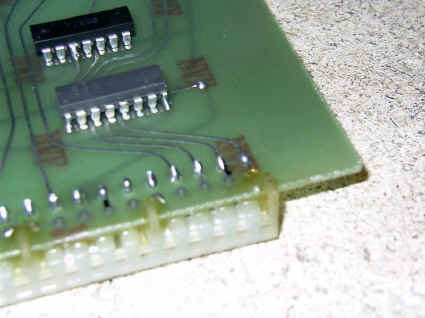
(especially since connection information was not included with the plans!). Further, the
circuit boards did not
have plated-though holes. This required builders to
solder numerous connections on both sides of each board. Their were also a
few unreported errors on the PC boards that required modifications to correct.
|
|
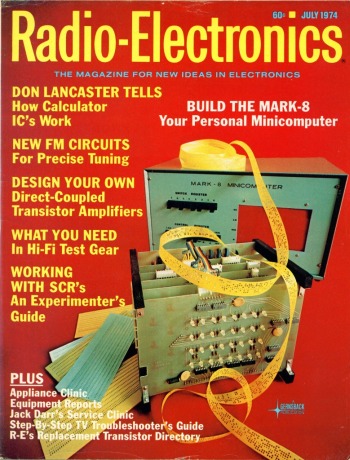
The Mark-8 Minicomputer in RE.
|
|
|
This proved too challenging a project for many builders. Many who have
emailed me to tell their Mark 8 stories, never got their machines to run,
or never finished.
I suspect that a lot of Mark 8 computers were abandoned, half finished, or
cannibalized for parts, and I suspect that most of the plans sold never
went far beyond a good first reading. Too bad, because the Mark 8 is a soundly
designed and beautiful machine. Second, when the 8080 based MITS Altair 8800 was described in Popular
Electronics just six months later, and offered
assembled or as a complete kit, the Mark 8 was on the fast track to
obsolescence. Why build a 8008 nearly from scratch when an Altair kit
using an 8080 chip can be
had for the same price?
|
| Aftermath
The article and the Mark-8 computer lit a fire
in the hobbyist world. Clubs and newsletters were spawned, mostly to
exchange software, construction tips, and troubleshooting hints. One
reason Popular Electronics rejected Jon Titus and the Mark-8 was that they
already had a microprocessor based project on the burner. According to Forrest
Mims, they had
envisioned a microprocessor "demonstrator" project of sorts, but when PE
caught wind of the growing Mark-8 revolution, they were eager to trump RE.
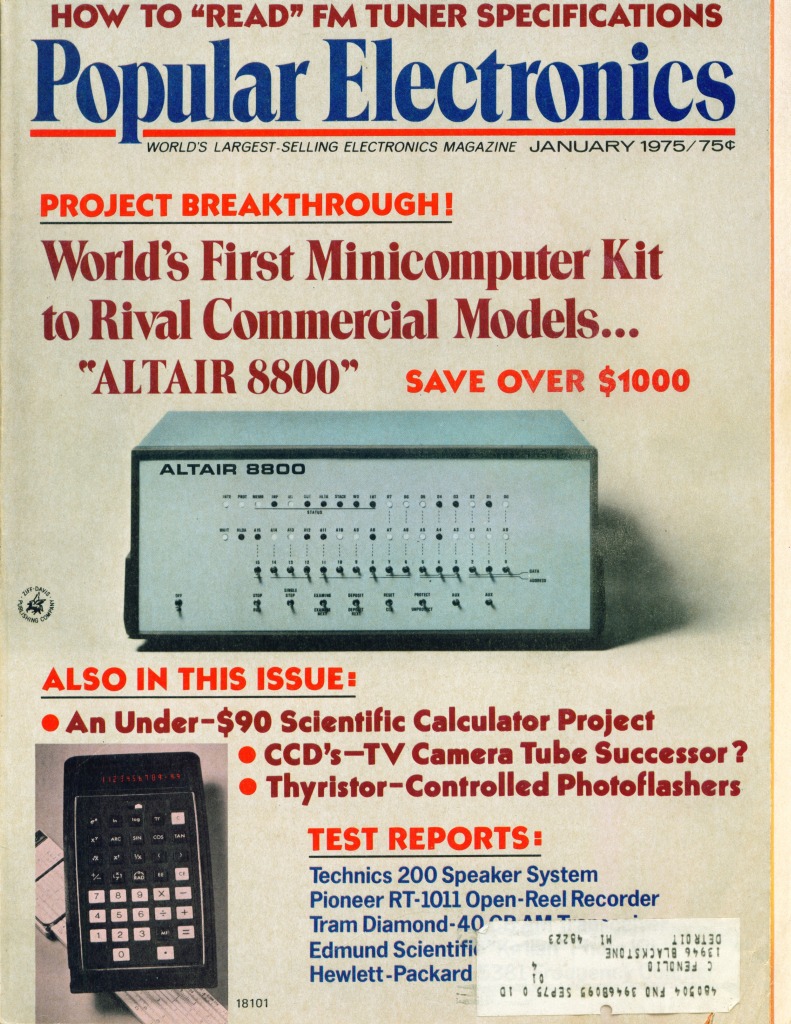
They dumped the lame demonstrator idea, and in January of 1975 they stole the crest of the wave with the
introduction of the Altair 8800. Bill Gates saw the Altair on the cover,
and we were off and running.
Today, the number of Mark 8 computers in existence, working or not, is
no more than a handful. Information on those I am aware of can be
found on my Other Mark-8's page. Only a few are known operational. Do you have one? Do you know someone who
does? Let me know!!
|
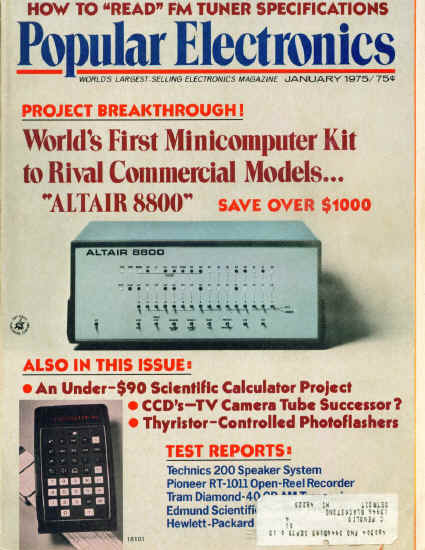
Latecomer, Altair 8800 on the cover of PE
|
|
Connections
The Mark-8, besides inspiring the development of the Altair 8800,
inspired another computer pioneer, Robert Suding. Dr. Suding built his
Mark 8 Minicomputer in July-August of 1974, and within days formed the
digital group. This new company sold a packet of plans for improving
the Mark 8, along with a plethora of new software. They soon offered a
video interface and also a cassette interface. For more info, visit my
digital group pages.
|
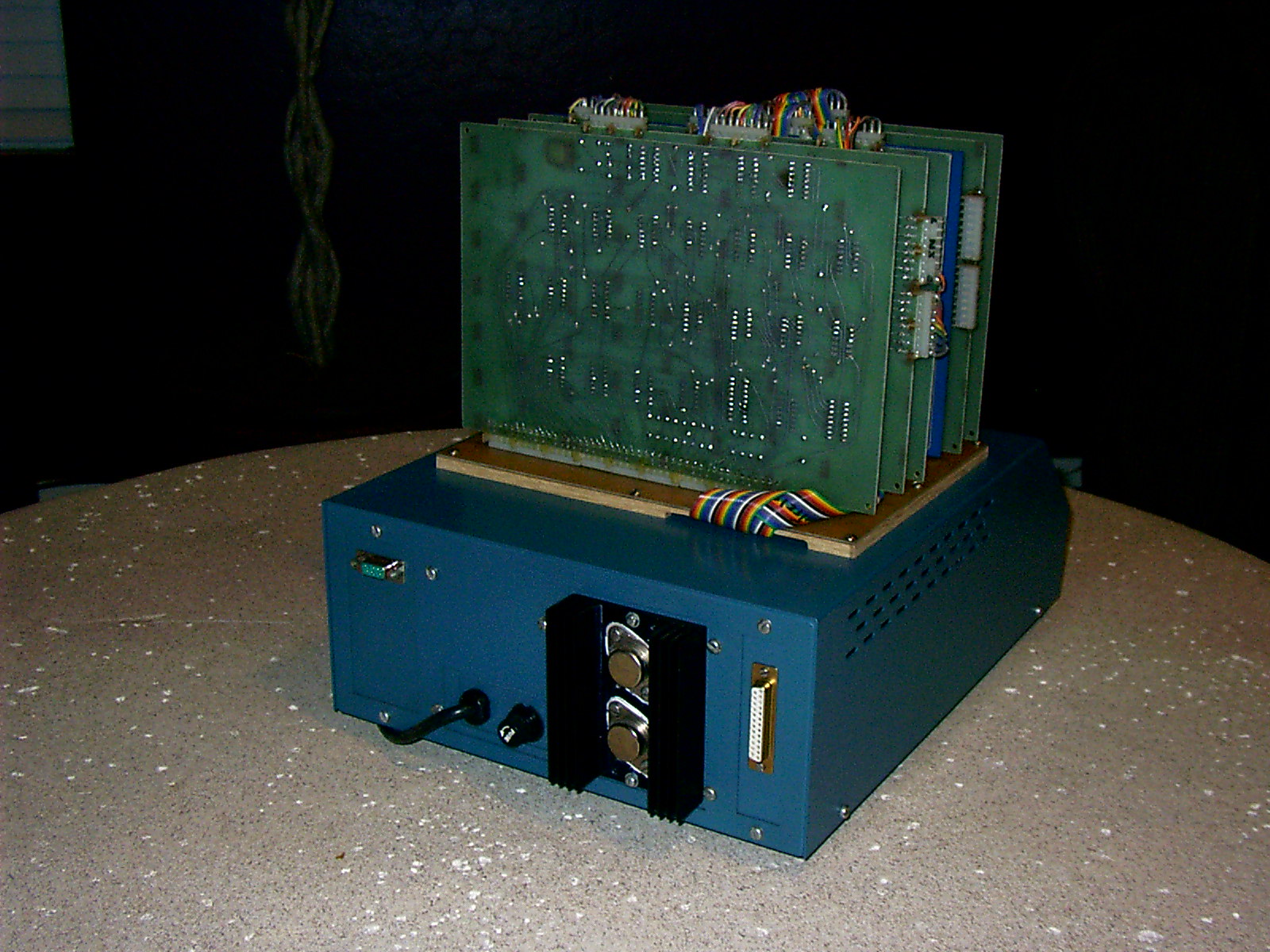
| My Mark-8 Minicomputer
I received my Mark 8 Minicomputer in small
pieces, early 1999, as a result of an ebay auction. (See
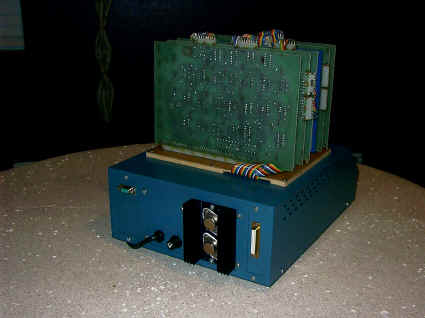
my restoration details.) It took me about two years to fully restore
to the condition shown in these photos (I took my time -- it's a hobby,
not a job!). Today, my Mark 8 computer sets on
a display cabinet in my living room, connected to my digital
group video interface, and hums along nicely 24/7, running various
programs. When idle, it simply blinks the front panel lights randomly, and
never fails to attract attention.
|
|
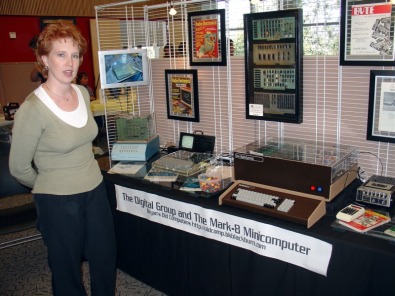
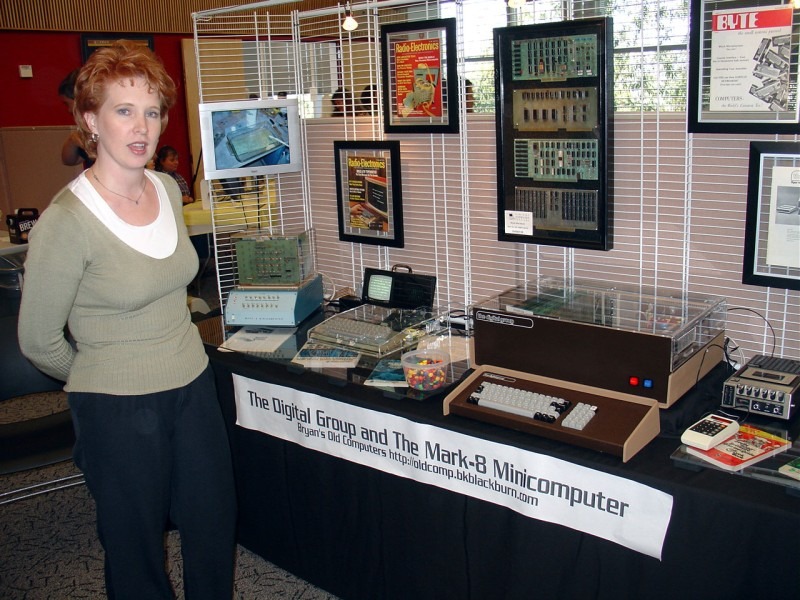
My pretty wife demonstrates my Mark-8 Minicomputer and my digital group Z80
system at the Vintage Computer Festival 6.0,
2003
|
|
|
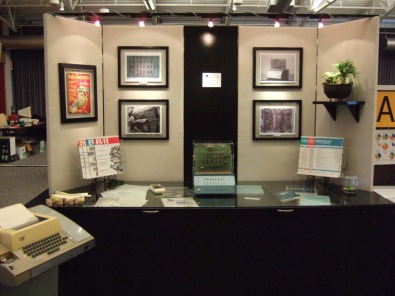
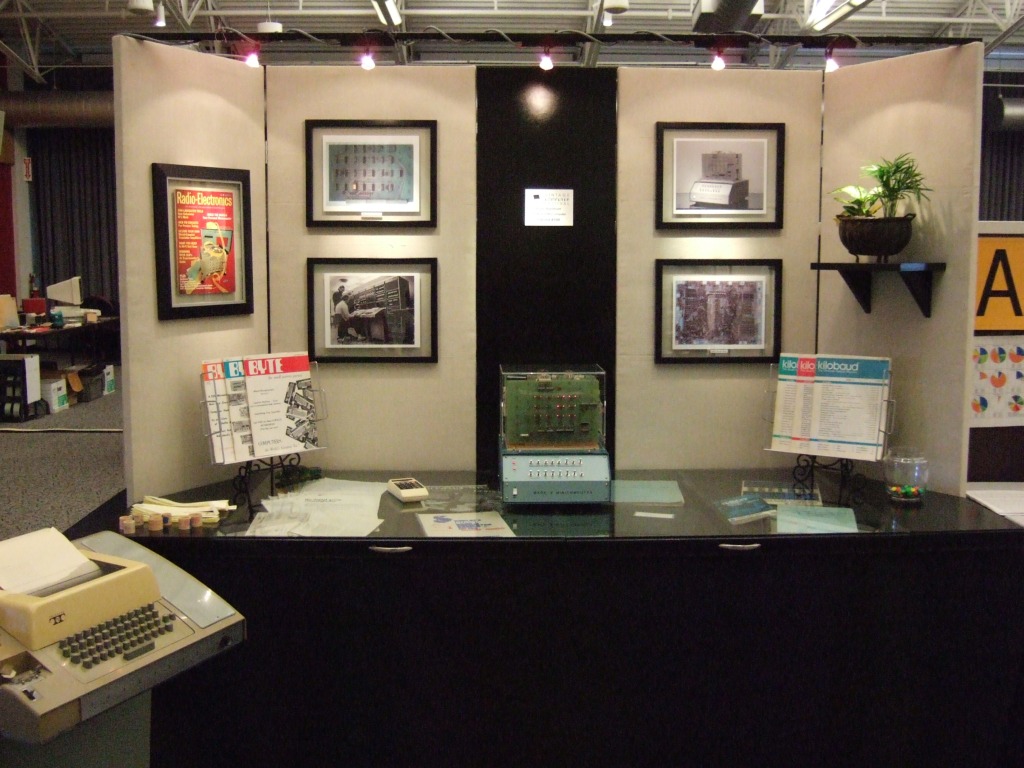
My Mark-8 Minicomputer on display with ASR-33
at the Vintage Computer Festival 9.0, 2006
|
|
|
|
|
|
|